Gropuwy: Mobiles
News Update
Loading...
‏إظهار الرسائل ذات التسميات Mobiles. إظهار كافة الرسائل

الجمعة، 18 فبراير 2022

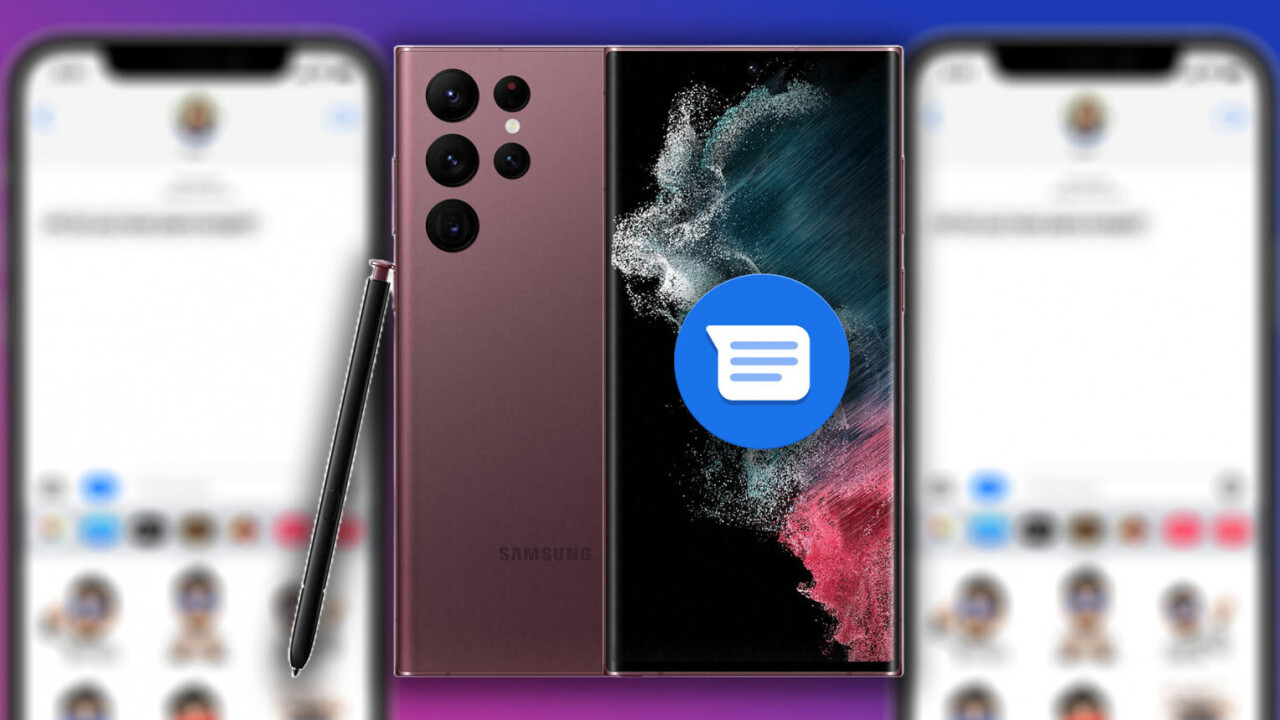
Samsung’s switch to Google Messages finally gives me hope for RCS

Samsung’s switch to Google Messages finally gives me hope for RCS

 Samsung’s switch to Google Messages finally gives me hope for RCS

Google’s effort to get everyone behind RCS — or Rich Communication Services, the standard attempting to replace SMS and MMS — is admirable. Sure, RCS isn’t really better than the myriad messaging apps people already use, but it’s a dramatic improvement over plain-old text messaging, adding features we’ve come to expect from modern communication services, including encryption, read receipts, reactions, and high-quality images.


The problem is: not every phone actually supports RCS out of the box — at least not properly. Apple has been a longtime holdout, sticking to iMessage in order to keep consumers in its walled garden. But on the Android side of the fence, it’s Samsung that’s needed some prodding.


With Google spearheading the RCS movement, many of the best Android phones have adopted Google Messages for the most consistent RCS texting experience. But the lack of support from Samsung has been one of the biggest hurdles for the standard to overcome.


Samsung Galaxy S22 Plus color options

The Galaxy S22 family is the first to default to Google Messages, allowing for more standardized RCS support. Credit: Samsung

Are we most creative when we're alone?

Here’s what the experts say


Technically, Samsung’s own messaging app does support RCS, but whether or not it actually works depends on your carrier. RCS is a little convoluted, which is why Google has sought to unify the standard behind the Messages app. Besides, you know, getting people to use its services.


Now that all US carriers have backed RCS via Google Messages, Samsung has finally seen fit to switch to Google Messages in America with the Galaxy S22. The new phones come pre-loaded with Google Messages (albeit with a Samsung skin), making it the de facto messaging standard for Android phones going forward.


After all, Samsung is constantly trading punches with Apple for the title of the #1 smartphone maker on the planet. It’s the world’s largest Android manufacturer by a comfortable margin, now that Huawei is barely a player in the West. And though the iPhone definitely dominates the US market, Samsung sitting at #2 isn’t too shabby either.


The fact that Samsung now defaults to Google Messages for most people means that a significant majority of Android users will be able to have a consistent RCS experience right out of the box, bringing the green team a lot closer to the seamless messaging Apple users have enjoyed.


It’s also worth noting Samsung already switched over to Google Messages in Europe with the S21 series, but capturing the US market is particularly important for the widespread adoption of RCS, especially considering Americans have a strange reluctance to use Messaging apps compared to the rest of the world.


Google Messages

RCS support in Google Messages brings reactions, high-quality images, end-to-end encryption, and more features typical of traditional messaging apps. Credit: Google

In fact, Samsung’s adoption of RCS gives me hope that maybe, just maybe, Apple will eventually support RCS as well.


It’s no surprise Apple has been reluctant to support the technology so far. Court documents have revealed that Apple has long used iMessage as a way of dissuading users from leaving its ecosystem — because no one wants to be a green bubble.


Naturally, adding support for RCS — a technology that significantly closes the feature gap between iMessage and plain-old text messages — seems detrimental to everything Apple has tried to accomplish with iMessage exclusivity.


But I’d argue that ignoring RCS has only worked for Apple because Android-to-Android texting has never exactly been good either. In other words, Apple was content to make texting with Android phones lame because, well, texting usually is lame for anyone who doesn’t have an iPhone.


Case in point: as a Pixel user, I’ve had access to RCS for years, but even now, almost every text I send and receive is via SMS. After all, most of the people I know either have an iPhone or a Samsung device.


Credit: Apple

Samsung’s backing could very well be the inflection point RCS needed. Globally, Android still makes up over 70% of the smartphone market, and Samsung defaulting to Google Messages very likely means most new phones around the world will be able to have a full-fledged messaging service out of the box. In other words, RCS is all but guaranteed to become the norm within the next few years.


Apple’s lack of support for RCS didn’t used to be a big deal. It simply wasn’t widespread enough, even among Android phones. But now that most Android phones will arrive with out-of-the-box support for RCS via Google Messages, Apple risks looking like it is staying with 40-year-old, unsafe SMS technology for no good reason other than sticking it to Android users.


Don’t get me wrong; I don’t expect Apple to announce support for RCS soon. I would be surprised if it happened this year.


And RCS still has some hurdles of its own to deal with, including the fact that so many Android users around the world already default to messaging services like WhatsApp, Facebook Messenger, and Telegram.


But with carriers and all its biggest competitors backing the new standard, it seems a given that Apple will have to concede to RCS eventually. We may never get iMessage on Android, but I finally have hope we’ll get the next best thing.
الثلاثاء، 15 فبراير 2022

Can galaxies without dark matter tell us how the universe ends?

Can galaxies without dark matter tell us how the universe ends?

 Can galaxies without dark matter tell us how the universe ends?

Raise your hand if you live in a stable universe that’s rapidly expanding to support its own vastness. Not so fast Earthlings. We might have an end-game level crunch-time problem on our hands.


Up front: Everyone’s heard of the Big Bang. And long-time Neural readers will certainly be familiar with the Big Rip. But it’s long past time we talked about the Big Crunch.


This hypothetical event would be our universe’s final act. It would essentially be the exact opposite of the Big Bang.


Mark your calendar for June 16 & 17!

Tickets to TNW 2022 are available now!


Our universe would collapse in on itself until it became an infinitesimal singularity – a single point containing everything that ever was.


Background: The astrophysics world is all atwitter right now on the heels of the recent discovery of yet another galaxy that apparently contains low or no dark matter.


This is a lot like cutting open an apple and realizing that instead of its delicious, juicy pulp, it contains… well, nothing.


It wouldn’t make much sense because we expect there to be “something” inside the apple to help it keep its physical form. Even air would be something. Finding nothing would be a difficult pill to swallow.


Such a discovery would force us to rethink the physics of apples, much like Sir Isaac Newton did in the summer of 1666.


More background: The Big Crunch is, of course, only theoretical. But the recent discovery of these “dark matter-free” galaxies could lend some credence to the idea.


This is because many scientists believe that dark energy and dark matter make up the majority of the universe.


We believe our universe started expanding the moment the Big Bang happened and hasn’t stopped since. And we believe that this expansion is fueled by dark energy.


Dark matter (theoretically) works diametrically to dark energy. It’s believed to be a force that holds space together.


It’s a bit more complicated than all that, but the important part is that we can only observe these forces indirectly. That’s why they’re called “dark,” we can’t actually see them, but astrophysics simulations don’t tend to work unless we account for them.


How it all ends: Obviously, if the entire universe were once again reduced to a singularity, as scientists believe it was just before the Big Bang, everything in it would be… rearranged. We can’t say it would be “destroyed” because it would all still be there, it would just be infinitely tiny.


It’s a pretty good bet than anything living wouldn’t survive the Big Crunch. And the lack of dark matter in observable galaxies could be a major cause for concern.


This is because, as astrophysicist Paul Sutter wrote in an article published earlier today, whether or not the universe itself is actually “stable” remains an open question.


An unstable or even “mostly stable” universe could be potentially catastrophic for the future of its inhabitants. This may have something to do with the fact that the universe hates entropy.


According to Sutter:


The apparent metastability of the quantum fields of the universe is a little unsettling. Although it could mean that the universe could persist for billions, even trillions, of years without anything going wrong at all, it could also mean that the universe is already beginning to transform.


This sounds like a form of error-correction at a fundamentally universal level. Sutter hypothesizes such a transformation could be entirely mundane, leaving our observations of the universe mostly unchanged. However, they also posit that it could radically alter the underlying physics of the universe to such a degree that chemistry and atomics as we understand them no longer function viably.


Quick take: The lack of dark matter in nearby galaxies is a cause for concern because, currently, we can’t explain why it isn’t there. Like the pulp inside of an apple, we expect to see dark matter inside of a galaxy when we use technology to penetrate its outer skin.


Ultimately, this could be nothing. Science is hard and sometimes the answers to big exciting questions are boring. Maybe the dark matter is there and we just aren’t looking for it the right way.


But the scientists are convinced they’ve got it right, at least as “right” as any other observations on distant galaxies have been. And, if they are right about the missing dark matter, then it’s possible the “instability” of the universe could be a big problem.


If the Big Crunch were to eventually happen, there should be a single moment where the universe’s expansion away from its original singularity converts into a reduction toward an infinitesimal point again.


This process could have already begun.


According to Sutter’s article:


All it would take is one little shake in the wrong direction, in some random patch of the universe, where the Higgs falls apart and the underlying quantum fields find a new, more stable configuration. That region of “new” universe would then propagate outward at nearly the speed of light through the “old” universe.


Sutter isn’t necessarily referring to the idea of the Big Crunch, but the ideas they present lend themselves to the possibility of such an end for our universe.


The Big Crunch, or some other universe-altering event, could be happening right now. And we’d have no way of knowing when its effects would reach our neck of the cosmos. It could be trillions of years from now or before you finish reading this sentence. 


Whew! Glad we’re all still here.


The good news is that if the universe can go from Big Bang to Big Crunch once, it seems perfectly plausible to assume it can do it again. So if we all snuff it in an instant, we can take solace in the fact that the stardust we’re made out of could once again burn brightly after the next Big Bang populates the cosmos with stellar entities again.


Maybe our entire universe is just a time crystal expanding and contracting inside a giant quantum computer.


Featured

[Featured][recentbylabel]

Featured

[Featured][recentbylabel]
Notification
This is just an example, you can fill it later with your own note.
Done